How Vendra helps AstroForge build asteroid mining spacecraft.


“Knowing that I’m going to get a quality part, as designed, when it’s quoted - that level of assurance has a high value.”
Robyn Ringuette, President of AstroForge, on getting parts made with Vendra
Why AstroForge chooses Vendra.
Building the spacecraft to mine asteroids
AstroForge is building toward something that sounds like science fiction: mining asteroids for platinum group metals and bringing them home. If it works, it means less digging up the planet to get them.
To pull it off, they’re building two hard things at once. The mining equipment, and the spacecraft that carries it into deep space.
That second part wasn’t the plan. Like a lot of companies, AstroForge expected to build the mining side and just buy a spacecraft bus off the shelf. Then they went looking.
“It turns out when you get into it, there really aren’t many [satellite bus manufacturers] that are competent, or competent at a price point that actually works for a startup.”
So they built their own.
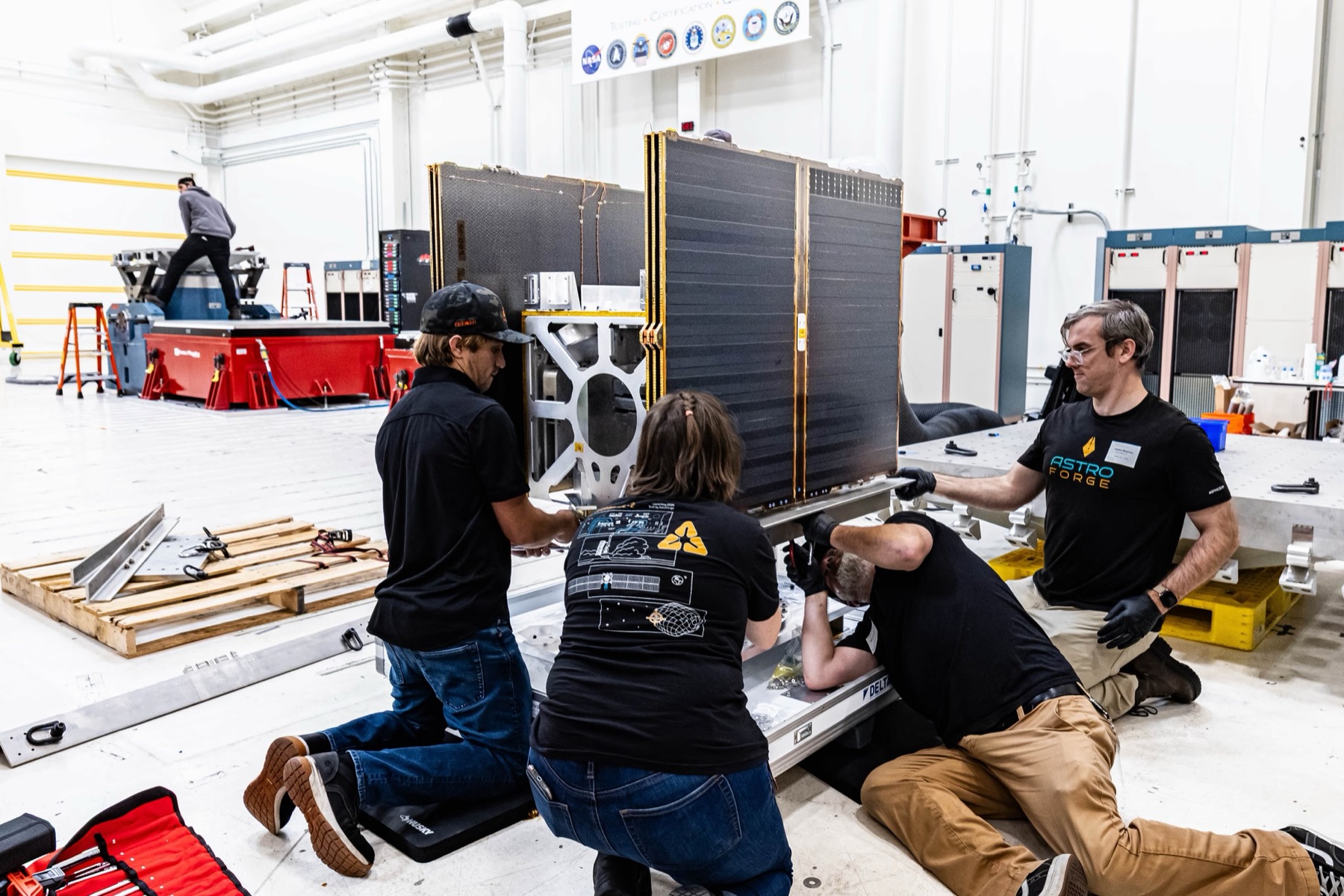
That takes real range: from precision machined parts and composite structures, to solar arrays and specialty coatings. And every part has to go through full qualification before it flies.
Machines are forever. Demand comes in waves.
Robyn’s engineers wanted another CNC mill. They couldn’t get enough parts through the one they had.
“I said, ‘Is the machine running 24/7?’ If it isn’t, then the problem isn’t that I don’t have enough machines. Come to me with 80% plus utilization and I’ll talk about buying another one.”
That’s the real math behind why AstroForge uses Vendra. A machine is a fixed cost you carry forever, but the work that feeds it comes in bursts.
“You have all these designed parts, and you go get them in. Then there’s this lull where you’re putting things together and vibing it. Then something breaks, and now you want it in days.”
Buying enough machines to cover peak demand means carrying idle capacity when the rush passes. AstroForge uses Vendra to absorb those surges, while keeping its own shop focused on the work that needs to stay in-house.
The problem isn’t the quote. It’s the silence.
Today, you can order machined parts online pretty easily. Upload a file, get a quote back in seconds, and wait for the part to show up.
But the parts Robyn got back from other platforms were all over the place. And he doesn’t just mean that the tolerances and quality were poor. He means the service too. Once those platforms hand off your job to whoever is actually making the parts, you lose visibility. A job quoted two weeks takes four. Sometimes eight.
What impacts the AstroForge team isn’t the quote or even the parts. It’s the radio silence when a job slips and they’re left guessing their build schedule.
This is the Vendra difference.
“Being able to actually have a conversation about, ‘hey, what’s going on,’ and getting insight into the processes that are moving. All of that is really helpful.”
What AstroForge leans on Vendra for
“Where we’ve used Vendra is on parts that need to show up on time.”
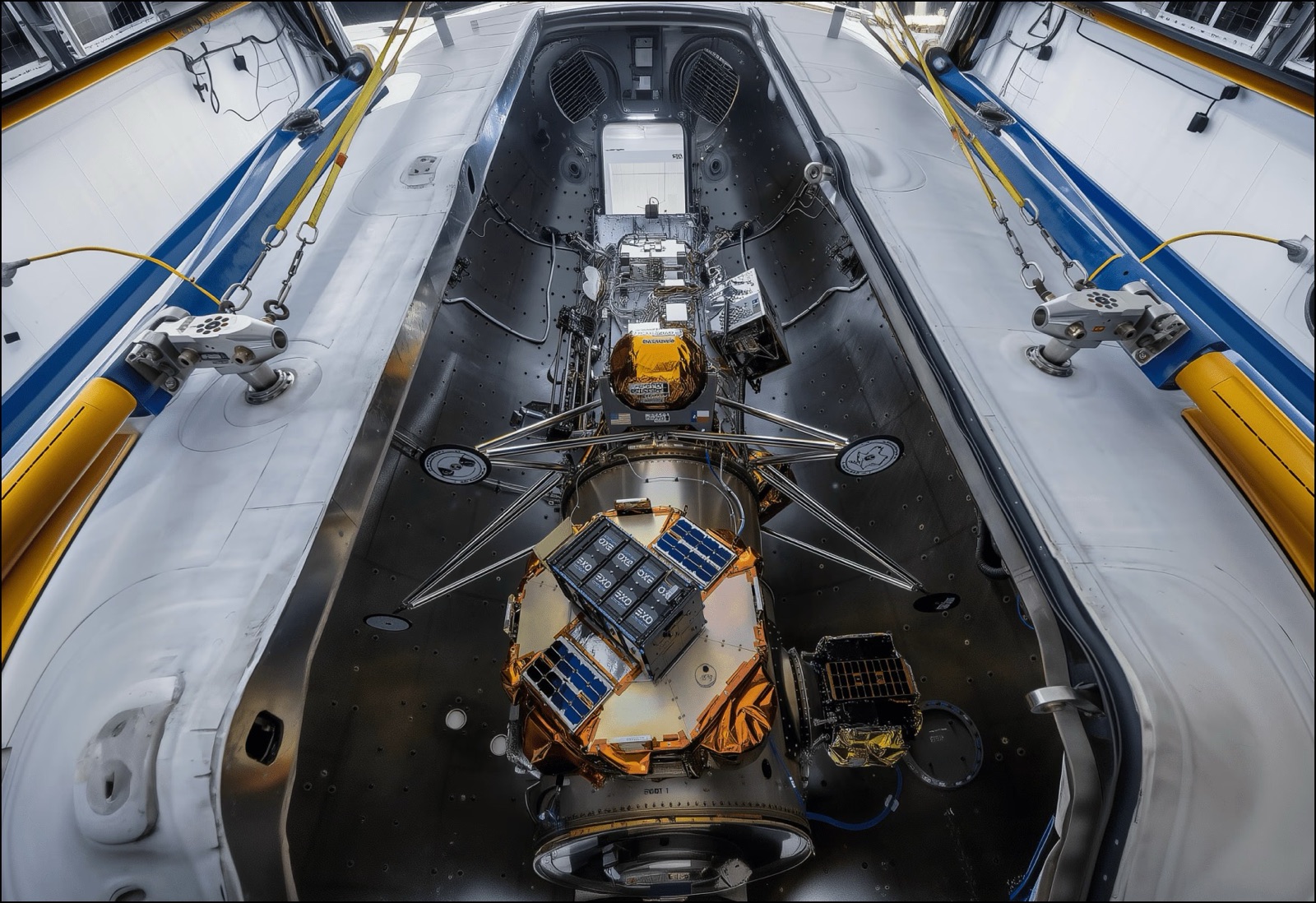
Vendra has made adapter rings, thermal interface plates, tank clamps, brackets, honeycomb-panel inserts, and a recent load ring for AstroForge.
Some are straightforward 3-axis parts. Others are more complex: a large, thin adapter ring with a tight flatness tolerance, or parts that need specific aerospace materials and four different finishing steps.
The point isn’t that AstroForge can’t make these. They have a machine shop. It’s that Vendra lets them choose where to point it.
“If I need to balance my load, I can focus on something that’s a little harder or riskier schedule-wise here, and let Vendra take care of the other stuff so I don’t have to worry about it.”
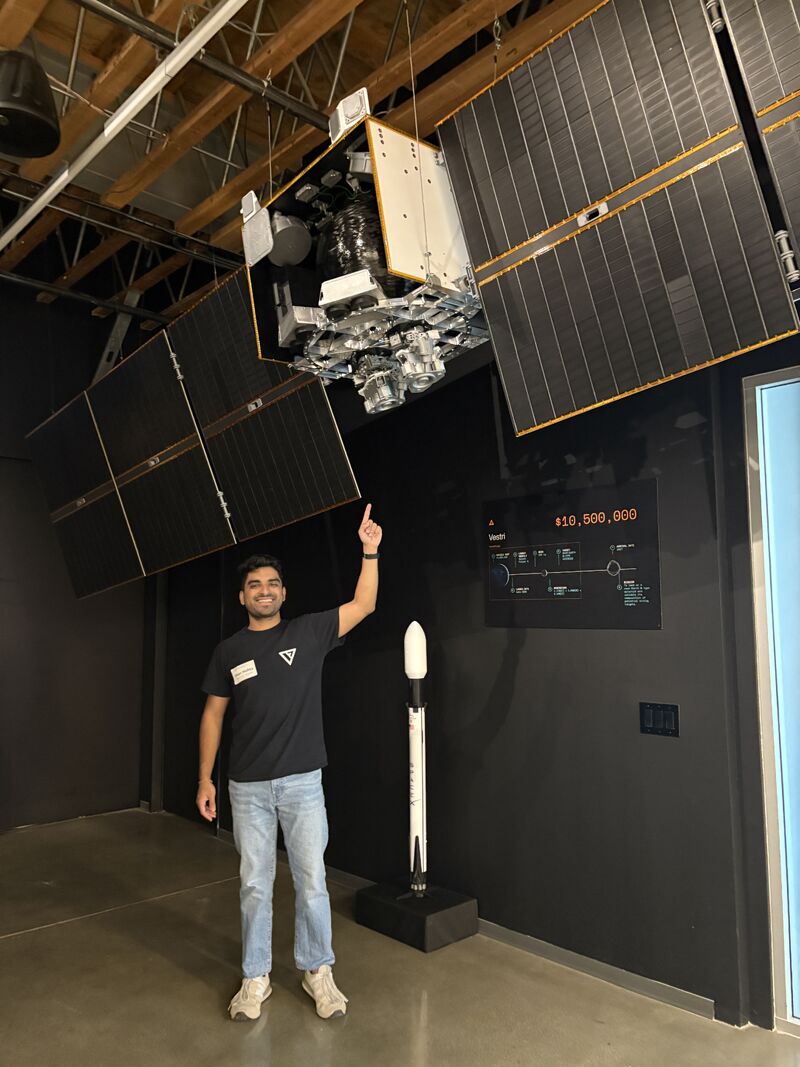
The full range, from prototype to flight hardware
AstroForge’s spacecraft moves through development, structural qualification, and eventually acceptance testing. Every round throws up something new. A part gets revised, or reordered in a small batch, or remade to a different spec.
Some parts are early models with loose tolerances, nobody’s precious about them. Others are flight hardware that has to fit right and survive the shake table. The load ring is one that really matters.
“Vendra is able to provide that spectrum. From ‘this is for a model, I don’t really care’ all the way up to ‘we’re actually flying this.’ And if it breaks, we’ve got a problem.”
That’s why, for the parts that fly, reliability matters even more than speed.
In manufacturing, no news is often good news
“We don’t talk a lot. That’s a really good sign!”
AstroForge works hard to keep a diverse supply base, in-house and out-sourced, so a single machine going down or a single supplier going quiet never stops the business.
Vendra has earned a steady place in that mix: absorbing the surges, protecting the test schedule, and quietly doing the work that keeps the mission moving.
“I appreciate the service Vendra is providing. Thank you for being part of our journey.”
Frequently asked questions
Yes. For AstroForge, Vendra has supplied parts including a large, thin adapter ring with a tight flatness tolerance, as well as components requiring specific aerospace materials and four different finishing steps.
Yes. AstroForge’s development process involves revised designs, small-batch reorders and parts remade to different specifications. Vendra supports these needs as the spacecraft moves through development and testing.
Spacecraft builds create bursts of demand for parts, followed by periods of assembly and testing. Vendra provides additional manufacturing capacity during those surges, helping AstroForge keep work moving without expanding its own machine shop.
When a part is delayed without an update, AstroForge’s engineers are left guessing how to adjust their build schedule. AstroForge values being able to speak with Vendra and understand what is happening during production.
Submit your CAD files and part requirements through Vendra’s Request a Quote page. Include drawings and any material, finishing, inspection and delivery requirements so the team can review your project.